Edo State Development Pillar

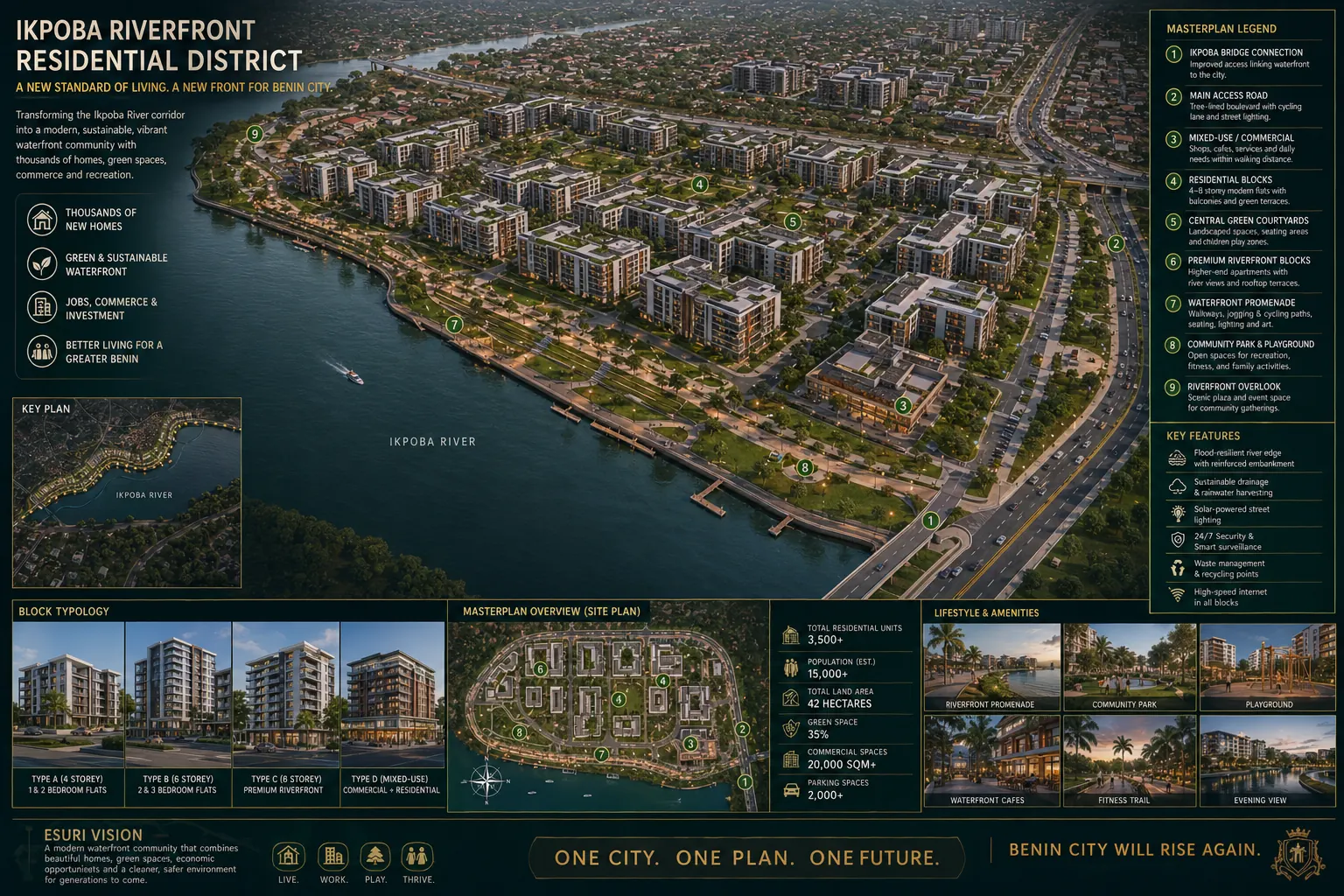
Housing & Communities

Housing is not only about buildings; it is about planned communities, social housing, family support and a welfare-state approach inspired by Germany’s social-market model.

Back to 8 PillarsBlueprint PDF
Housing & Communities
Why this matters

Advantages

  • Creates safer and better-planned neighbourhoods.
  • Builds social housing for low-income families, key workers, young people and vulnerable households.
  • Supports mixed-income communities rather than separating the poor from opportunity.
  • Links housing to schools, clinics, parks, transport and jobs.
  • Creates a welfare-state support system inspired by Germany’s social-market approach, where housing, work, training and family support are connected.
  • Encourages land-value growth and private-sector participation without abandoning social responsibility.
Delivery profile

Cost, funding and jobs

These are planning estimates for discussion. Final figures require feasibility studies, engineering designs, procurement review and financial modelling.

Funding route

Mixed funding: public budget, partnerships, project vehicles and private participation where appropriate.

Job prospects

25,000 – 40,000 potential jobs in construction, estate management, facility maintenance, retail, landscaping and building trades.

Delivery principle

Deliver in phases, publish milestones, and connect local skills to project work.

How it will be funded

  • State-supported social housing funds for low-income and vulnerable households.
  • Land-value capture and public land preparation.
  • Mixed-income housing Special Purpose Vehicles with clear social-housing quotas.
  • Private developers through joint ventures, but tied to affordability and community obligations.
  • Mortgage finance, cooperative housing and diaspora investment products.
  • State budget for enabling roads, drainage, water, schools, clinics and public amenities.
Social housing and welfare state

A humane housing and welfare model

ESURI should build social housing as part of a wider welfare-state approach inspired by Germany’s social-market model. The aim is to protect families, workers, young people and vulnerable households while still encouraging enterprise, private investment and personal responsibility.

This means housing estates should not stand alone. They should be linked to schools, clinics, transport, skills centres, job access, childcare, community facilities and social support.

The goal is a state where development is measured not only by buildings, but by whether families live with dignity and young people can build a future.